
Blog
Forcing Amaryllis Indoors: From Bare Bulb to Bloom in Eight Weeks

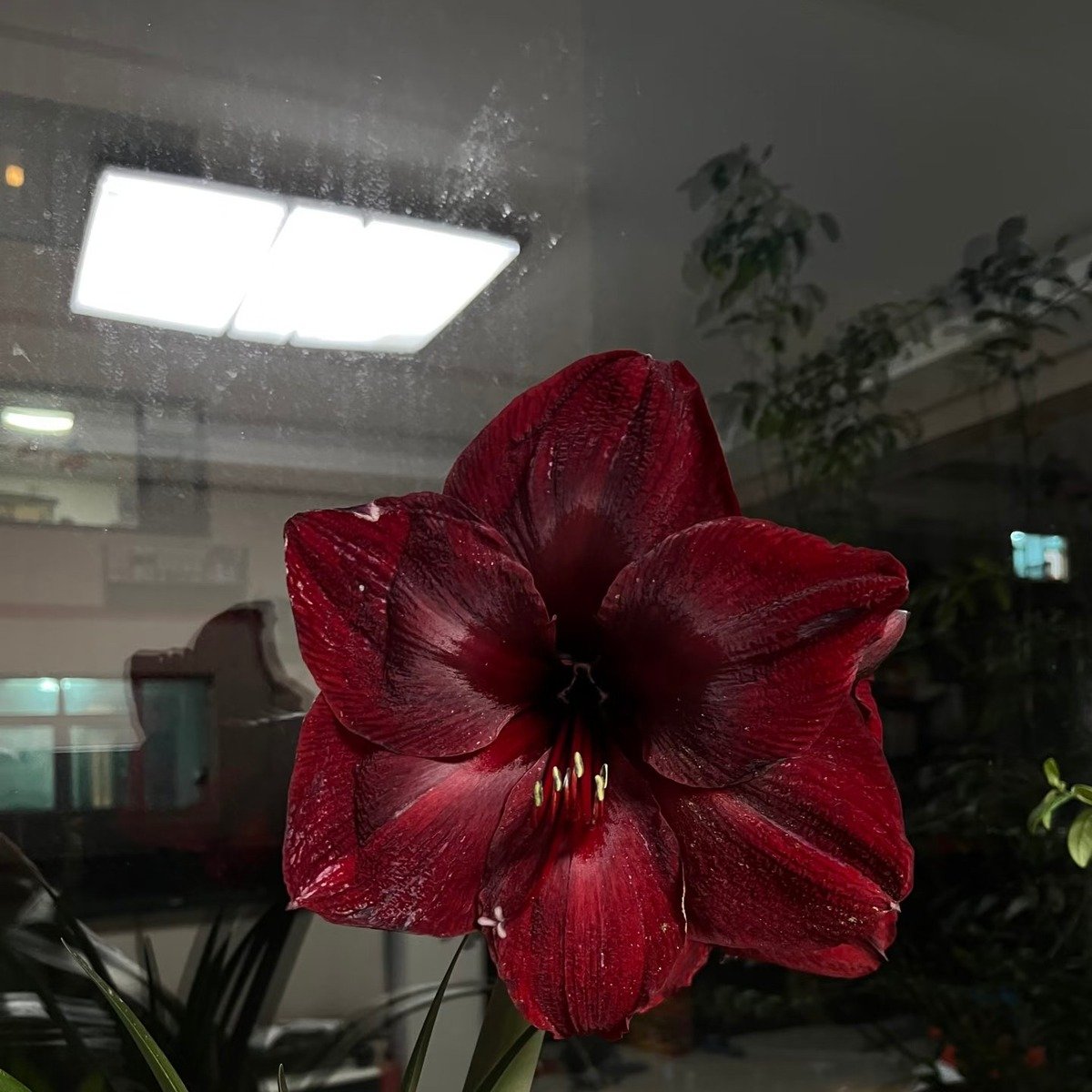
Amaryllis is the most forgiving bulb you can grow indoors, and the most dramatic. A single bulb the size of a fist sends up a stem that can reach 60 cm, carrying four to six trumpet flowers the width of your hand. Get the timing right and it will open on the date you choose.
It is also the bulb most often ruined by kindness — too much water, too warm a room, and a pot that is far too big.
Count backwards from the date you want flowers
Amaryllis takes roughly eight weeks from potting to first open flower at normal room temperature. Work backwards:
- For Christmas flowers: pot in the last week of October.
- For New Year: pot in early November.
- For late January: pot in late November.
- For a succession: pot one bulb every two weeks rather than all at once.
Warmer rooms speed things up, cooler rooms slow them down. If you are running late, a warmer spot near a radiator can pull the schedule forward by a week or so — but do not let the compost dry out in the process.
Pot and compost
The most common mistake is over-potting. An amaryllis likes to be cramped: choose a pot only 3–5 cm wider than the bulb on each side, and heavy enough not to topple when the flowers open. A 15–18 cm pot suits most bulbs.
Use a free-draining compost — two parts multipurpose to one part grit. Plant the bulb so that a third of it sits above the surface of the compost. Bury it completely and the base of the bulb stays wet; that is how amaryllis rots.
The first four weeks: roots, not leaves
After potting, water once and then keep the compost almost dry until you see the first green shoot. This feels wrong. It is not. The bulb is building roots, and roots need air as much as moisture. A bulb sitting in damp compost for four weeks in a warm room will rot before it ever flowers.
Keep the pot at around 20–22 °C, in bright light. Do not put it in a dark cupboard — that produces a pale, stretched stem that flops over.
Weeks five to eight: stems, buds and staking
Once the shoot is 5 cm tall, start watering properly: soak the compost, then let the top two centimetres dry before watering again. As the stem extends, turn the pot a quarter turn every few days so it grows straight towards the light.
When the flower buds begin to colour, the stem is top-heavy. Insert a slim cane or a birch stake and tie the stem loosely in two places. Without support, a heavy double amaryllis will lean and eventually snap.
Move the pot to a slightly cooler spot as the first flower opens. Cooler air — around 18 °C — makes the flowers last noticeably longer.
Watering rules that prevent rot
- Water around the edge of the pot, not over the bulb.
- Never let the pot stand in a saucer of water.
- If the bulb feels soft at the base, stop watering immediately and let it dry out.
- During flowering, the plant is thirsty — check the compost every two or three days.
After the flowers fade
Cut off the spent flower head, but leave the stem and leaves. Move the pot to the brightest spot you have and keep watering and feeding — this is when the bulb rebuilds itself for next year.
In late spring, when the leaves begin to yellow, stop watering and let the foliage die down. Store the pot somewhere cool and dry for the summer. Start watering again in autumn, and the same bulb will flower again — often with more stems than the first year.
You can also plant it out in the garden in spring, in a sheltered, sunny spot. Amaryllis are hardy in mild climates and will naturalise in warm gardens.
Why your amaryllis went blind
Bulbs that produce leaves but no flowers are usually one of three things: too small a bulb to begin with, a summer that was too wet while it was supposed to be resting, or a previous year where the foliage was cut off too early. Buy the largest bulbs you can find, and let the leaves finish their job.
Amaryllis bulbs for forcing
For a classic dark trumpet, the Deep Burgundy Amaryllis Bulbs are hard to beat on a winter table. The Scarlet Red Double Amaryllis Bulbs give you the full double form, and the Creamy White Amaryllis Bulbs are the quietest and most elegant of the three.
Pot one this week, count eight weeks forward, and put it somewhere you will see it every morning. That is the whole appeal of forcing bulbs: the garden comes indoors, on your schedule.