
Blog
Spring Bulbs for Shade: Planting Under Deciduous Trees

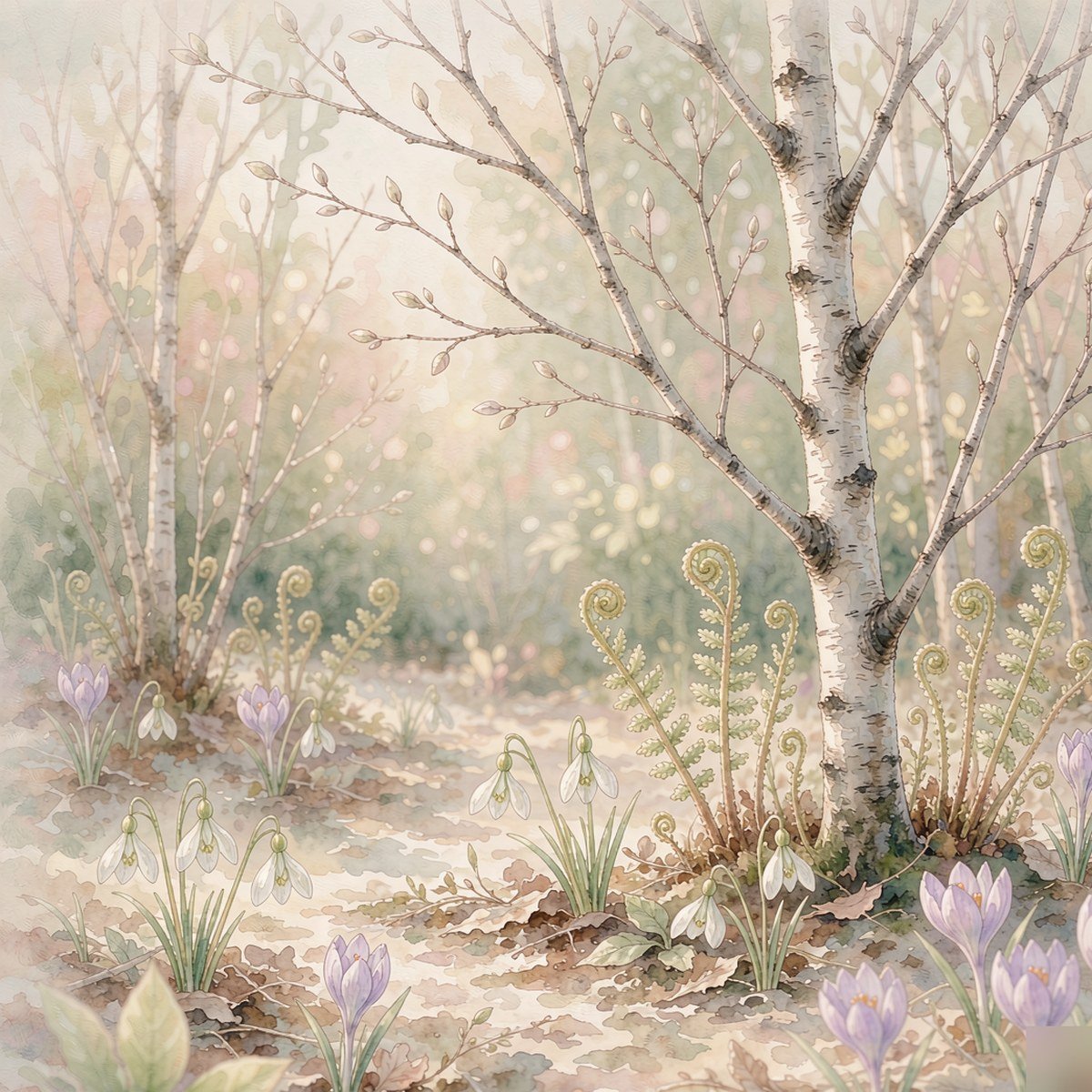
Quick answer: Shade under a deciduous tree is an advantage in early spring, not a drawback. The branches are bare from February until late April, so low-growing bulbs get the light they need before the canopy closes. Choose snowdrops, early crocuses, daffodils, and lily-of-the-valley, plant in shallow pockets between roots rather than digging the whole bed, and leave the foliage alone after flowering. You will get a full sequence of bloom in a spot where turf and most perennials struggle.
Why a shady bed is not a dark bed
Walk under a maple or oak in January and you will see why bulb gardeners prize these spots. Sunlight reaches the soil almost unimpeded for six to eight weeks while the tree is leafless. By the time the canopy expands, the earliest bulbs have already flowered, set seed, and begun to recharge for next year. A bed that looks hopeless in July can be the brightest part of the garden in March.
The second advantage is moisture. Tree canopies break the force of heavy rain, and leaf litter builds a crumbly top layer that bulbs root into easily. The challenge is competition: mature roots take up water and nutrients, and they resent large-scale digging. Work with the tree rather than against it, and the planting gets easier each year.
Choose bulbs that finish before the canopy closes
Timing is everything in a shade bed. Plants that bloom after the leaves emerge will stretch, flop, or simply skip flowering. These four groups have the right internal clock and the right tolerance for dappled light:
- Snowdrop bulbs for shade gardens and woodland planting are usually the first to appear, often pushing through a thin layer of leaf mold while frost is still in the ground.
- Deep purple crocus bulbs open on any sunny patch and make a bright ribbon along the edge of a shaded border. In full shade they stay closed, so keep them at the sunniest margin.
- Classic trumpet daffodil bulbs for naturalising are the dependable middle wave. They tolerate light shade well and gradually form wider clumps where the soil is not too dry.
- Lily-of-the-valley bare roots for shade borders are the long-game plant. They spread by underground runners and fill the gloomiest corner with fragrant bells in late spring.
All of these are risky for pets and children if eaten, so keep planted areas tidy and never leave spare bulbs where they can be chewed or swallowed.
Plant in pockets, not in a pit
The most common mistake is rototilling or excavating a wide bed under a tree. Cutting through roots stresses the tree and removes the structure that holds your soil together. Instead, plant in small pockets with a hand trowel:
- Map the roots first. Push a trowel into eight or ten spots to find the gaps between major roots. Aim for pockets at least a foot from the trunk.
- Lift only what you need. Loosen a hole roughly twice the depth of the bulb, then set the bulb pointed end up and backfill with the soil you removed.
- Add leaf mold, not rich manure. A handful of shredded leaves or finished compost improves structure without burning the roots or encouraging soft growth.
- Water once, slowly. Settle the soil around the bulb and let rainfall handle the rest. Constantly soggy ground rots bulbs far faster than a dry spell.
- Mark every pocket. Use small plant labels or a sketched map so you do not spear next year’s shoots while planting something new.
If you have almost no soil between roots, stop digging and plant in shallow bowls of topsoil laid over the roots instead. Bulbs will root upward into those pockets and still flower acceptably.
A simple shade bloom timeline
Use this sequence to decide where each group belongs. The goal is overlap without crowding, so the display moves through the bed instead of opening all at once.
| Window | What to plant | Where it looks best |
|---|---|---|
| Late winter | Snowdrops, early crocuses | Near paths and the sunny outer edge of the canopy |
| Early spring | Trumpet daffodils | Drifts between roots, three to five bulbs per pocket |
| Late spring | Lily-of-the-valley | The cooler, darker side of the bed where little else grows |
| Early summer | Shade-loving begonias | Containers and gaps left by finished bulbs |
Planting depth follows a simple rule: cover a bulb with roughly two to three times its own height of soil, and place corms such as crocuses about three to four inches down. In a shade bed, err slightly shallow rather than deep because the cool soil delays emergence.
Carry the display into summer
Once the daffodils and crocuses fade, the tree leafs out and the bed turns green and quiet. Resist the urge to cut the yellowing foliage. Those leaves are feeding next year’s flowers, and they look far better tucked behind a low perennial than tied up in knots. Give them roughly six weeks before removing anything.
For colour after the bulb season, add a shade-tolerant tuber in a nearby pot. Soft camellia begonia bulbs for shaded garden corners take over exactly when the bulbs step back, giving you a continuous display from late winter into summer without changing the bed. Keep the pot slightly drier than the ground bed through winter, since begonia tubers rot if they sit in cold wet compost.
Our daffodil meadow guide explains the foliage-resting rule in more detail, and the late-autumn planting guide covers why cool soil matters if you are still shopping for bulbs this month.
Mistakes that empty a shade bed
- Forcing sun-loving tulips into deep shade. They may bloom once, then fade. Keep them in the sunniest strip or skip them here.
- Digging close to the trunk. Feeder roots live near the surface. Stay outside the drip line where possible.
- Clearing fallen leaves in autumn. That natural mulch regulates temperature and feeds the soil. Use it.
- Expecting flowers from tiny bulbs. A small bulb has limited reserves. Buy firm, heavy stock for the first season.
- Watering the dormant bed weekly in summer. Spring bulbs rest dry. Water only in a prolonged drought.
If a clump produces leaves but no flowers, check the symptom-by-symptom diagnosis guide before replacing it; crowding and early foliage cutting are frequent causes in shade beds.
Your next step
Pick one tree in your garden, kneel down, and find three clear pockets between its roots. Order snowdrops for the first wave, daffodils for the middle, and lily-of-the-valley for the darkest corner, then plant them this month while the soil is cool and workable. Add one pot of shade begonias for the summer handoff and mark every spot on a quick sketch. Come March, the patch you walk past today will be the first thing in the garden to flower. Browse our spring-bulb collection and start with the varieties linked above.