
Blog
Tazetta Daffodils Indoors: Fragrant No-Chill Winter Bowls

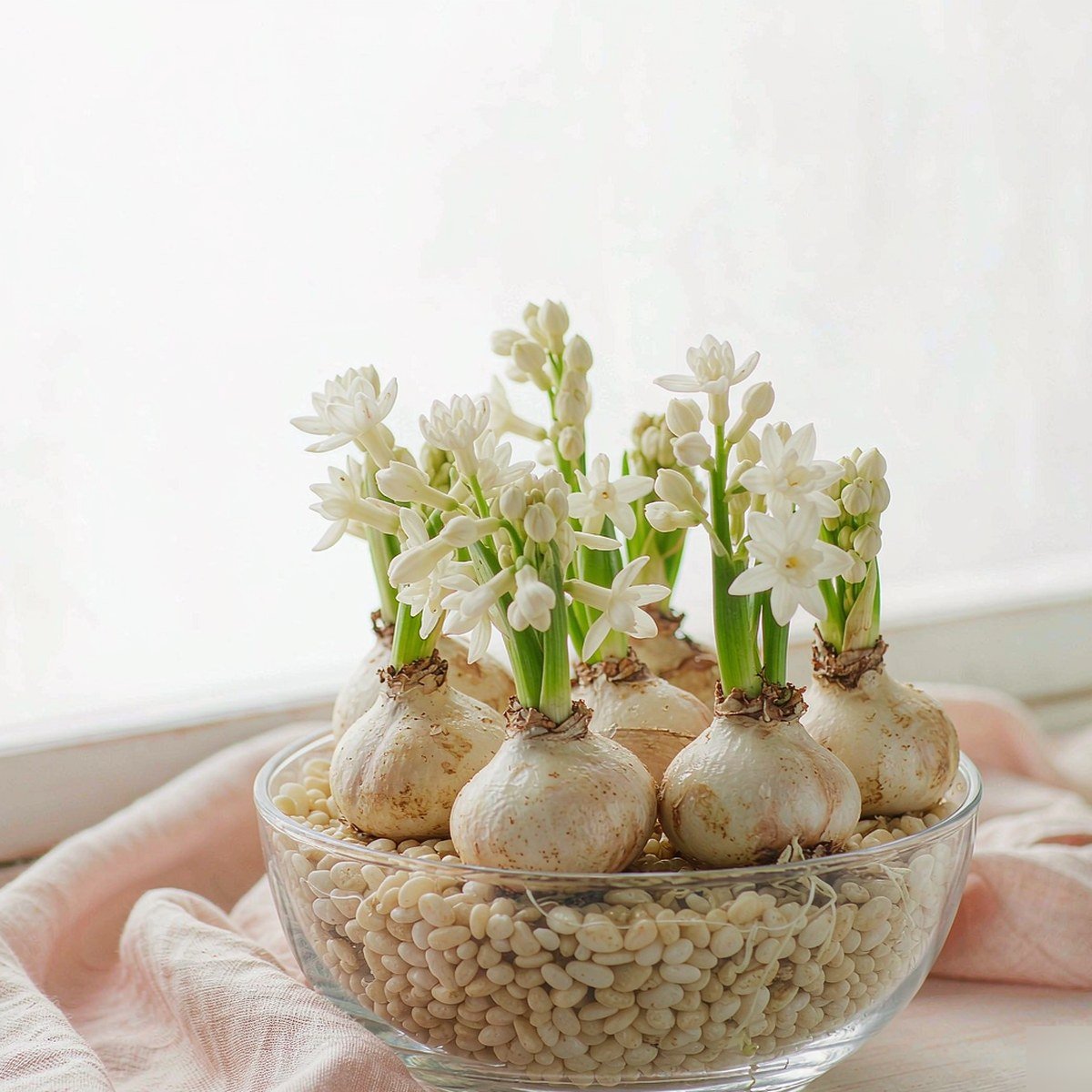
Quick answer: Tazetta daffodils are the group that includes paperwhites, and unlike most spring bulbs they flower indoors without a cold spell. Set firm bulbs in a shallow bowl of pebbles or a pot of free-draining mix, keep water just below the bulb bases, and move them into bright light once roots form. You can expect flowers roughly four to six weeks later. Plant a small batch every two weeks and you will have fragrance on the table from late December into February. Keep all bulbs away from pets and children, since they are risky if eaten.
Why tazetta daffodils suit winter bowls
Most spring bulbs need weeks of cold before they will flower. That is why tulips and ordinary daffodils are planted outdoors in autumn and left to wait for winter. Tazetta types come from milder climates and carry their own flowering instructions. Give them water, light, and a reasonable room temperature and they simply grow. For a gardener who wants blooms on a specific date in December, that changes everything.
They are also generous. Each stem carries a cluster of small, scented flowers rather than a single bloom, so a bowl of six bulbs reads as a bouquet. The scent is strong enough to fill a dining room, which is exactly why you should start with one bowl rather than filling every windowsill before you know how your house handles it.
If you want a taller, single-stem statement instead, compare this with our amaryllis forcing guide. If you enjoy the ritual of a glass vase, the hyacinth-on-water method is a good winter companion project, but it does involve a chilling period that tazetta bulbs skip entirely.
Choose the bulbs and the vessel
Start with stock that feels heavy for its size and firm all over. Reject anything soft, shriveled, or showing mold at the neck, because a bulb with damaged tissue rarely gives a clean display indoors. Bigger bulbs usually carry more flower stems, so this is one project where paying for size pays off.
- Multi-flowered tazetta daffodil bulbs for indoor forcing are the natural first choice and the ones to plant for a reliable scented bowl.
- Layered double narcissus bulbs with ruffled cups give a fuller, more formal flower shape if you prefer a softer look in the same room.
- Mixed spring daffodil assortment is useful for planting successive bowls with slightly different flower forms rather than an identical repeat.
- Soft golden-cup daffodil bulbs make an elegant single-variety pot for a side table or a gift that is meant to look restrained.
For the container, choose a shallow bowl at least three or four inches deep, with or without drainage holes. Glass is popular because you can watch roots descend through the stones, but a plain ceramic dish hides the roots and suits a more traditional table setting. A pot with drainage holes filled with potting mix is steadier and easier to water; a bowl of pebbles is prettier and needs more attention to water level.
Plant a pebble bowl or a soil pot
Both methods work, and neither takes more than ten minutes. The steps below use pebbles, which suit a shallow glass bowl. If you choose soil, follow the same spacing and swap the stones for a moist but not soggy potting mix.
- Wash the stones. Add two to three inches of clean pebbles or gravel to the vessel and rinse away any dust so the water stays clear.
- Set the bulbs point up. Place them close together, almost shoulder to shoulder. Crowded bulbs lean on one another instead of flopping outward as they grow.
- Anchor them firmly. Add more pebbles around each bulb until only the top third to half is exposed. A bulb that rocks in its stone will not root well.
- Add water to the base. Pour water until it just touches the bottom of the bulbs. Never submerge them, or the bases will rot before roots reach the water.
- Root cool, then bloom bright. Keep the bowl in a cool spot with indirect light for a week or two while roots form. Once shoots are a couple of inches tall, move it to your sunniest window and turn it every few days so stems grow straight.
In soil, fill the pot about two thirds full, set the bulbs an inch apart, cover so the tips show, water thoroughly, and let the excess drain away. After that, water only when the top inch of mix feels dry.
Count backward from the date you want flowers
Timing is the only real skill in this project. Room temperature shifts the result by a week or so, so treat the table below as a planning guide rather than a promise. Cooler rooms slow growth and give sturdier stems; warm rooms rush flowers and shorten them.
| Start date | Likely bloom window | Best use |
|---|---|---|
| Early November | Late November into early December | Early gatherings and a first test bowl |
| Mid November | Late December | Christmas and holiday tables |
| Late November | Mid January | Quiet winter color after the holidays |
| Early December | Early February | A late batch to carry winter to an end |
Buying stock early also matters. Bulbs kept in a cool, dry, dark place until planting day are in better condition than bulbs that have sat in a warm shop window for weeks. Write the planting date on a label tucked into the bowl or on a note beside it. When you plant the next batch two weeks later, you will know exactly which display is due to open.
Keep stems upright and scent manageable
Tall, thin stems that lean over are the most common complaint. Heat and low light are the usual causes. Move the bowl away from radiators and heating vents, give it the brightest window you have, and rotate it every second day. If the stems still stretch past eight or ten inches, push a few thin stakes around the rim and loop soft twine or ribbon loosely around the clump. A bulb ring works just as well and is nearly invisible once the flowers open.
Check pebble bowls every couple of days and top up the water to the same level. Do not fertilize. The bulb contains everything it needs for this one flowering, and extra feeding tends to produce leaves rather than better blooms. Pick off faded florets so the bowl stays tidy and the remaining flowers last longer.
Fragrance is personal. What smells wonderful in a large room can be overpowering in a small bedroom, so try one bowl in a shared space first. If you are gifting bulbs, tell the recipient what to expect and place the bowl where the scent can move around rather than sit close to a bed.
After flowering, and your next step
Indoor tazetta bulbs are generally treated as a single-season display. They have spent their reserves and seldom produce a worthwhile second bloom indoors, so compost them once the flowers fade. In frost-free climates you can try planting them outdoors, where they may rebuild over several seasons, but do not count on a repeat. The waxed amaryllis gift guide explains a different holiday format if you want a plant that can be kept instead. Remember that daffodil bulbs are risky for pets and children if eaten, so keep spare stock out of reach and sweep up fallen pieces promptly.
Choose a date on the calendar, count back six weeks, and put that day beside your name. Order a small batch of firm bulbs, set one pebble bowl this week, then plant another in two weeks. By the time the holidays arrive you will have a living, scented display that no cut flower arrangement can match. Browse the linked bulbs above and start your first bowl today.