
Blog
Caudex Plants: Growing Desert Rose and Stephania as Living Sculpture

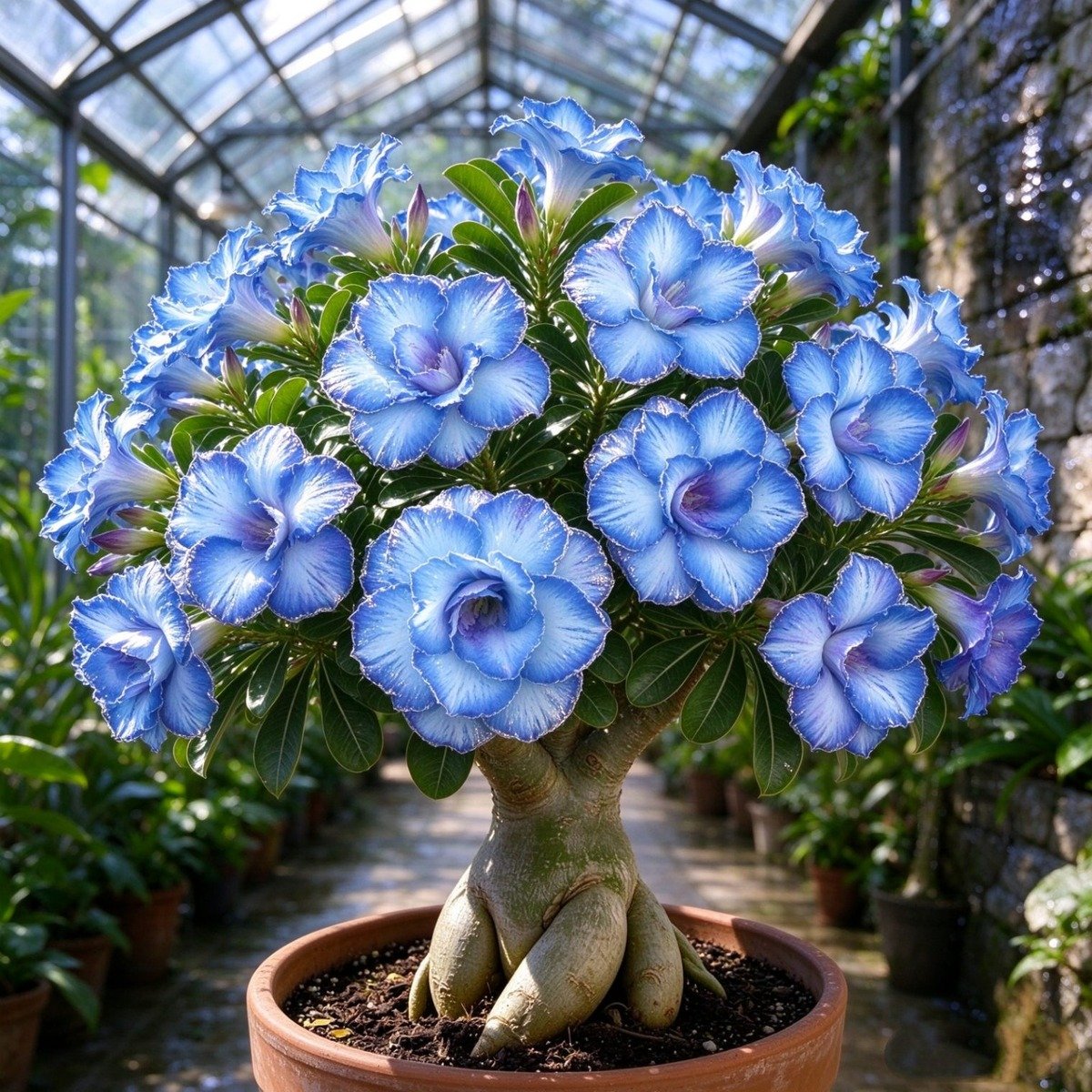
Some plants are grown for flowers, some for leaves, and a few for the shape of the plant itself. Caudex plants belong to the last group: a swollen trunk or tuber that stores water, often with a few leaves on top, looking like something that should be in a glass case rather than a pot.
Two of the easiest are the desert rose (Adenium obesum) and Stephania erecta. Both are forgiving once you understand the one rule that matters: they would rather be dry than wet.
What a caudex is for
A caudex is a water-storage organ. In the wild these plants live where rain comes in short bursts and then disappears for months. The swollen trunk or tuber holds enough water to carry them through the dry season, and the leaves are shed when conditions turn harsh.
Understanding this explains almost every care decision. A caudex plant in a rich, wet compost is being asked to do something it has not evolved to do, and it will rot.
Compost that drains like grit
Forget ordinary houseplant compost. Caudex plants need a mix that is at least half mineral: two parts grit or pumice to one part compost, with a handful of bark for structure. A pot with plenty of drainage holes is essential, and a layer of grit on the surface keeps the neck of the plant dry.
Terracotta pots are better than plastic because they wick moisture away from the compost. Choose a pot only slightly larger than the caudex — an oversized pot holds too much wet compost for too long.
Watering: soak, then drought
Water thoroughly until it runs out of the base, then wait until the compost is completely dry before watering again. In summer that might mean every ten days. In winter it might mean once a month, or not at all.
The most common mistake is a little water every few days. That keeps the compost permanently damp, which is exactly the condition that rots a caudex. A plant that is soaked and then left to dry is far healthier than one that is never quite dry.
Light and warmth
Both desert rose and stephania want bright light — several hours of direct sun a day, ideally. A south-facing windowsill is the minimum; a conservatory or a sunny patio in summer is better.
They also want warmth. Anything below about 10 °C slows them down, and frost will kill them. In cold gardens they are houseplants or conservatory plants, not garden plants.
Desert rose: flowers on a fat trunk
Desert rose is grown for both its swollen trunk and its flowers, which appear in clusters at the tips of the branches through summer. It is a member of the dogbane family and its sap is toxic, so wear gloves when pruning and keep it away from pets and children.
Prune in early spring to shape the plant and encourage branching. Feed with a high-potassium fertiliser through summer; too much nitrogen gives leaves and no flowers.
Stephania: the round-leaf vine
Stephania erecta is grown almost entirely for its foliage — round, shield-shaped leaves on thin stems rising from a woody, turtle-like caudex. It is a climbing plant in the wild, so give it a small trellis or let it trail.
It likes a little more moisture than desert rose but still needs to dry out between waterings. The leaves die back in winter, which is normal — reduce watering to almost nothing and wait for new growth in spring.
Winter dormancy
Both plants slow down or go dormant in winter. Stop feeding, cut watering right back, and keep them cooler but frost-free. Do not panic when leaves drop; it is the plant’s rest period, not a sign of failure.
Start watering again in spring when you see new growth. A caudex that has been kept too wet through winter is soft at the base and usually cannot be saved — which is why the dry winter matters more than anything else.
The rot rule
- If the base feels soft, stop watering immediately and let the plant dry out completely.
- If the caudex is firm, the plant is healthy even if it has no leaves.
- Never water a caudex that is sitting in a cold, dark room — it cannot use the water and will rot.
- When in doubt, wait another week. These plants tolerate drought far better than kindness.
Caudex plants to start with
For flowers as well as form, the Sky-Blue Desert Rose is the most unusual of our desert roses, and the Golden Yellow Desert Rose is the most generous with bloom. For foliage, the Stephania erecta Lush Leaf Plant gives the fullest head of round leaves, and the Potted Caudex Plant is the easiest way to start.
Buy the shape you like, pot it in grit, water it like a desert and then leave it alone. That is the whole method — and the reason these plants look like sculpture is that they are treated like it.