
Blog
Waxed Amaryllis Gifts: What to Expect and How to Keep the Bulb

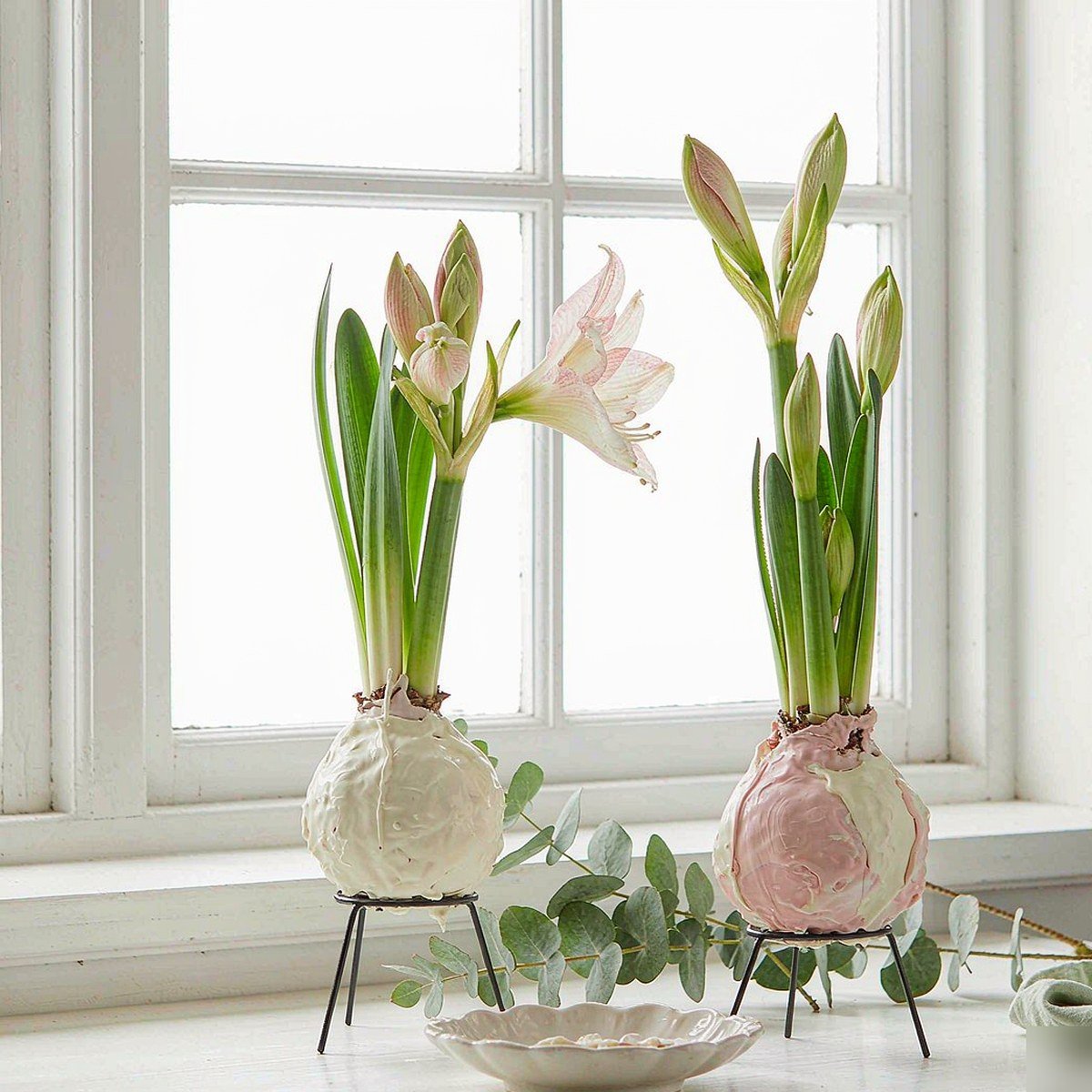
Quick answer: A waxed amaryllis is a sealed, single-season holiday display. Do not add water, give it bright indirect light, rotate it every few days, and enjoy the flowers for roughly two to three weeks after they open. The bulb can sometimes be coaxed into another year, but only if it is still firm and you are willing to remove the wax and grow the leaves on in a pot. Treat the bloom as the gift, and any later rebloom as a bonus.
What you are actually buying
The wax coating is not decoration alone. It seals moisture inside the bulb, which is why a waxed amaryllis can sit on a mantel or dining table without a pot, soil, or a watering can. Every flower you see is built from energy the bulb stored before it was shipped. That also explains the trade-off: the waxed format is designed for one impressive show, not for a decade of houseplant life.
Our waxed amaryllis Christmas gift set with ornament and knit hat is exactly this kind of display. It is a good choice for a desk, a sideboard, or a hostess gift where nobody wants to think about watering. If you would rather have a bulb you can keep in a pot year after year, start with a conventional bulb such as rose-pink double amaryllis bulbs instead, and use the method in our potted amaryllis forcing guide.
Amaryllis bulbs carry compounds that are risky for pets and children. Keep the display where it cannot be chewed or eaten, and sweep up fallen plant pieces promptly.
Setting it up for the best show
You cannot hurry a waxed bulb, but you can give it the conditions it needs to finish well. Work through this short checklist on the day it arrives:
- Unpack gently. The flower stalk is already forming inside. A knocked-off bud will not be replaced.
- Choose bright, indirect light. A north or east window is ideal. Direct midday sun can cook the wax and push the stalk too fast.
- Keep it out of heat paths. Radiators, fireplaces, and sunny car windows shorten the display.
- Rotate a quarter turn every two or three days. Stalks reach for the light and will lean if left in one position.
- Do not water. Water around the base of a waxed bulb does not reach the roots in any useful way and can encourage mold under the coating.
- Support it if needed. Once the stem is tall and heavy, set the bulb in a low glass vase or deep saucer so it cannot topple.
Expect four to six weeks from arrival to the first open flower at ordinary room temperature, then roughly two to three weeks of bloom. Cooler rooms slow the sequence and stretch the flowers; warm rooms rush both.
A simple timing and care table
Use this as a rough guide rather than a promise. Every bulb has its own internal clock, and a warm house can shift the dates by a week.
| Stage | What you will see | Your job |
|---|---|---|
| Week 1 to 2 | Nothing above the wax, or a tight green tip | Bright indirect light, no water, rotate |
| Week 3 to 5 | Stalk elongating, buds swelling | Keep rotating, add a support if it leans |
| Week 5 to 7 | First flowers opening | Move to a cooler spot out of harsh sun |
| Week 7 to 9 | Flowers fading | Remove spent blossoms, decide whether to try saving the bulb |
If you want flowers later in the season, stagger your purchases rather than trying to hold one bulb back. A waxed bulb cannot be paused in a cupboard and restarted on demand.
Should you try to save the bulb?
This is the honest part. Many waxed bulbs are prepared for a single display and may have a trimmed or damaged basal plate, so saving one is an experiment rather than a guarantee. Start by pressing the bulb gently. Firm is promising; soft, hollow, or mushy means it has spent itself. If it passes, soak it in warm water for ten to fifteen minutes and lift the wax away in pieces. Peel off any soft outer layers and stop if you find spreading mold deep in the tissue.
Cut the flower stalk close to the bulb, then pot it with the top third of the bulb above a free-draining mix. Water once, and after that water only when the mix has dried a little. Leaves are the goal now, not flowers: they rebuild the energy that will fuel a future stalk. Keep the plant in bright light through spring and let the foliage yellow naturally before a cool, dry rest. Our guide to lifting and storing tender bulbs explains the same dry-rest principle for outdoor bulbs, and the indoor bulb care notes are useful for understanding how much light a blooming bulb needs.
Choosing the next bulb
If the waxed display was a hit, keep the format for gifts and add one or two standard bulbs to your own windowsill. We find these easy to place in a bright room:
- Creamy white amaryllis bulbs for a quiet, minimal table setting.
- Scarlet red double amaryllis bulbs when you want a classic festive statement.
- Soft two-tone amaryllis bulbs for a gentle blush accent.
- Deep burgundy amaryllis bulbs for a dramatic single-stem display.
Pick a pot only an inch or two wider than the bulb, leave the shoulders exposed, and resist the urge to overwater. Those three habits do more for repeat bloom than any fertilizer.
Your next step
Set your waxed bulb in the brightest indirect light you have, put a reminder in your calendar to rotate it every few days, and let the display do what it was made to do. When the petals drop, decide with a gentle squeeze whether to attempt the pot experiment. Either way, you have had a week of winter colour without a single watering. Browse our amaryllis collection today and pair one waxed gift with a potted bulb you can enjoy for years.