
Blog
Lifting and Storing Tender Bulbs Before the First Frost

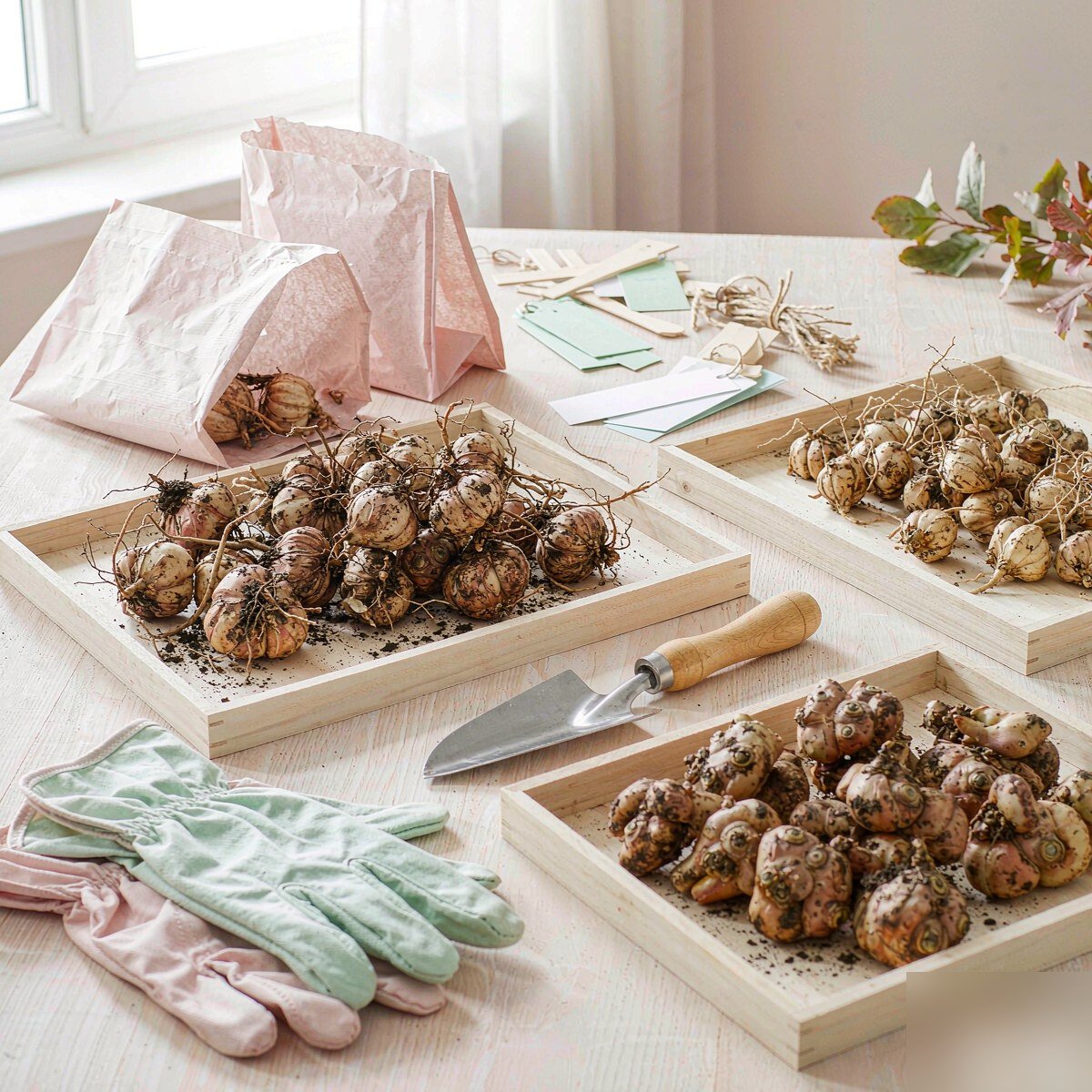
Quick answer: Where the ground freezes, tender summer bulbs cannot stay outdoors all winter. Lift them just after the first frost blackens the foliage, shake off loose soil, and cure them in a dry, frost-free place for one to two weeks. Then store them barely dormant in a cool, dark, well-ventilated spot, checking monthly for shrinkage or rot. Label every variety as you go. Done properly, lifting takes an afternoon and gives you the same plants back the following spring.
Which Bulbs Need Lifting and Which Can Stay
The dividing line is hardiness, not flower size. Spring-flowering bulbs such as daffodils and snowdrops are built for cold soil and can be left in the ground. Summer performers from warm climates are not. In most of the country, dahlias, gladiolus, tuberous begonias, elephant ears and tuberose need to come indoors for winter; in the mildest zones they can stay in the ground with a heavy mulch.
If you are unsure about your zone, dig them. A bulb stored in a box costs you an afternoon, while one left in frozen ground is usually lost. It is also worth keeping a few in pots all season, because a container is far easier to move under cover than a planted border.
When and How to Dig
Wait for the first light frost to brown the tops. That signal means the plant has finished moving energy back into its storage organ, so the bulb is at its strongest. Working too early sacrifices next years flowers; waiting too long risks a hard freeze damaging what you are trying to save.
- Cut the stems back. Remove foliage to a few inches above the bulb. Leave a short stub so you can still identify each plant.
- Lift with a fork, not a spade. Start well outside the clump and ease the tines underneath to avoid slicing the bulb.
- Shake off the soil. Do not wash the bulbs. A little dry soil on the skin helps them survive storage.
- Label immediately. Write the variety name on a waterproof tag as you lift. Colour and form are impossible to remember in February.
- Discard anything soft. Firm bulbs only. Mushy, mouldy or shrivelled specimens will not improve in storage.
Spread the lifted bulbs on a tray or newspaper in a dry, airy room out of direct sun for one to two weeks. This curing period dries the skin and seals minor cuts. If you are new to the timing, our summer bulb planting guide explains the other end of the cycle, when the soil finally warms again in spring.
Storage Conditions by Bulb Type
Every tender bulb wants the same three things: cool, dark and just dry enough. The details vary slightly, so use this quick reference before you pack them away.
| Bulb | Storage medium | Check for |
|---|---|---|
| Dahlia tuber | Dry peat, coir or shredded paper in a cardboard box | Shrivelling; a light mist if the skin wrinkles |
| Gladiolus corm | Mesh bag or open tray, dry and airy | Soft spots and mould on the corm skin |
| Tuberous begonia | Dry coir or vermiculite, stem stub left on | Excess dryness around the crown |
| Elephant ear rhizome | Paper bag in a warm, dry room | Rot at cut surfaces |
| Tuberose | Open tray in a frost-free, well-ventilated space | Dampness and fungal spots |
Temperature matters more than most gardeners expect. Aim for a steady 40 to 50 degrees Fahrenheit. A garage that swings from freezing to warm is worse than a consistently cool basement. Keep bulbs away from ripening fruit, which gives off a gas that can interfere with dormancy, and never seal them in plastic: trapped moisture is the fastest route to rot.
Choosing Bulbs Worth Saving
Not every summer bulb earns storage space, so start with varieties that give you something back. Bi-colour forms such as bi-colour dahlia bulbs are worth keeping because the two-tone blooms are hard to replace at short notice, and they cut well for the house. Decorative types like decorative dahlia bulbs make a strong mass planting and increase steadily when they are lifted and divided each year.
For reliable vertical colour, gladiolus is hard to beat. The mixed offering in this gladiolus collection gives a long sequence of bloom, and a single-colour cutting type is ideal if you want stems for a vase. Both store as corms and take up very little room over winter. If you grow flowers for cutting, our cut flower garden guide explains how to plan for a continuous supply rather than a single week of colour.
Tuberous begonias are another good candidate for lifting. A peony-form variety such as a peony-form begonia bulb produces generous double blooms in summer pots, while a trailing type softens the edge of a hanging basket. In regions with early frost, a container of begonias can simply be moved into a bright, cool room and rested with less water rather than lifted at all.
Foliage Bulbs and Night Scent
Elephant ears are grown for leaves rather than flowers, and a mature clump is too good to lose. The elephant ear bulb works beautifully in a shaded courtyard or a large pot, and clumping forms settle into woodland ground where the foliage can build into a screen. Lift the rhizomes before the soil freezes, cut the tops back and store them dry. Be aware that elephant ear can be a risk to pets and children, so avoid letting any part of it be eaten and keep lifted rhizomes somewhere they cannot be reached.
For a completely different kind of summer interest, tuberose carries a rich evening fragrance. This tuberose bulb sends up tall spikes that are excellent for cutting, and a cream-white form has waxy blooms that hold their scent late into the night. Both are frost-tender and should be lifted in the same way as gladiolus. A friendly reminder on feeding and resting applies here too: once the leaves yellow, stop feeding entirely, because the bulb is shutting down for the season.
Spring Replanting and a Final Check
In spring, reverse the process. Wait until the soil has warmed to around 60 degrees Fahrenheit, then replant at the same depth the bulbs grew at originally. Soak dry dahlia tubers for a few hours before planting to plump them up, and start gladiolus corms in succession every two weeks if you want a longer bloom window. If you are also growing bulbs indoors, the amaryllis forcing guide covers the same principle of a controlled rest followed by a warm restart.
Make this years lifting a simple habit: one tray, one label per variety, one cool shelf. Browse our tender summer bulbs now and choose the ones you will want to dig up, store and enjoy again next summer.