
Blog
Alliums in November: Late Planting for Tall Spring Structure

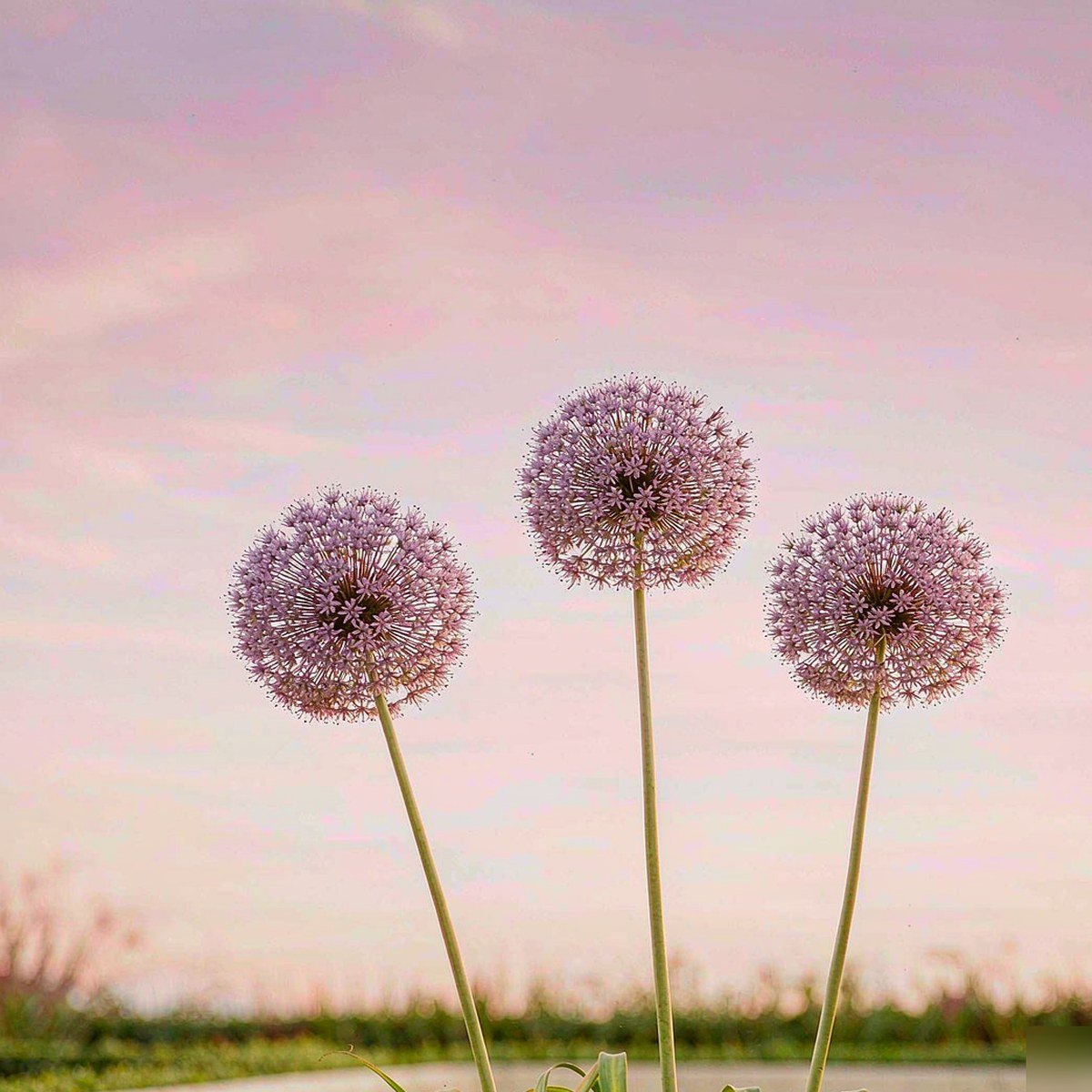
Quick answer: If the ground is not frozen, alliums are still worth planting in November. Choose firm, heavy bulbs, set large ones about six to eight inches deep in a sunny spot with sharp drainage, and plant in groups of at least five rather than single holes. Add grit to heavy clay, water once to settle the soil, and leave the foliage until it yellows after flowering. Tall alliums bridge the gap between late spring bulbs and early summer perennials.
Why alliums earn a place in the late plan
By November most bulb shopping is done, but alliums are among the last genera that can still go into the ground. They need a cold period like tulips and daffodils, so a late planting actually gives them exactly what they need, provided your soil is workable and your first hard freeze is still ahead. In milder regions the window runs even longer.
The reason to make room for them is timing. Most spring bulbs finish by late May. Large alliums open after them, holding the border together while early perennials are still building bulk. Their rounded flower heads sit well above the foliage, so a few clumps give a garden vertical structure that low-growing tulips and crocuses cannot provide.
Start with stock that can carry a tall stem
A large flower head on a weak bulb is a recipe for disappointment. Handle each bulb before you buy or unpack it: it should feel heavy, look plump, and have intact papery skins. Soft spots and deep cuts mean the bulb has already lost energy to rot or desiccation.
- Tall ornamental onion bulbs with giant spherical blooms are the focal choice for the back of a sunny border where you want height and a strong outline.
- Mixed ornamental onion collection gives you several flower heights and forms, which makes it easier to grade plants from the front of the bed to the back.
- Fragrant blue-purple hyacinth bulbs belong in the earlier wave of the same border, adding scent while the alliums are still building their stems.
- Blue-purple bearded iris bulbs extend the display into early summer with upright leaves that hide the fading allium foliage.
- Purple and golden yellow crocus bulbs open at the front of the bed in the first warm days and mark where the later clumps will rise.
Buy more than you think you need. Alliums look thin as single plants and convincing in drifts. Five to ten bulbs of one variety grouped tightly will read as a single bold clump, while five different varieties scattered across a bed will look like an accident.
Set depth and drainage correctly
Planting depth and water are the two decisions that determine whether a clump returns. Work through these steps while the soil is cool but still loose:
- Choose the sunniest, sharpest spot you have. Alliums dislike wet ground in any season. If your bed holds puddles for hours after rain, use a raised bed or a large pot instead.
- Set the depth by bulb size. Large bulbs go roughly six to eight inches down; smaller ornamental onion types need about four to six inches. As a general rule, cover a bulb with two to three times its own height of soil.
- Fix heavy clay before you fill the hole. Work a handful of coarse grit or sharp sand into the soil around the planting pocket rather than only at the bottom. A solitary gravel layer at the base of a clay hole can act as a sump and hold water against the bulb.
- Space for a clump, not a row. Set bulbs four to twelve inches apart depending on their mature size, in an irregular group. Mark the outline with a small label so you do not disturb it in spring.
- Water once, then step back. Water thoroughly after planting to settle the soil. Through winter, rainfall is usually enough. Only irrigate during an unusually dry spell while the ground is unfrozen.
Mulch lightly after the soil cools. Two inches of shredded leaves or fine bark evens out temperature swings and suppresses weeds, but keep the mulch away from the crown so air can move around the emerging shoots.
Build a border that hands over cleanly
The best allium planting is never a solo act. Plan the bed as a sequence so something is always opening from late winter to early summer. Use this simple framework and adjust the varieties to the space you have.
| Bloom window | Layer | Where to place it |
|---|---|---|
| Late winter to early spring | Crocuses | Front edge and gaps near paths |
| Mid spring | Hyacinths and early daffodils | Middle of the bed, in small drifts |
| Late spring to early summer | Tall alliums | Back of the border, in groups of five or more |
| Early to mid summer | Bearded iris and summer bulbs | Between and in front of the allium clumps |
Repeat one plant at least three times through the bed so the eye has a rhythm. A purple ribbon that starts with crocuses at the front, continues with hyacinths in the middle, and ends with allium globes at the back looks designed rather than collected. Our cut flower garden guide covers a separate bed if you want stems for the vase as well, since cutting from a display border always leaves a gap.
Care through spring and the summer handoff
Once shoots appear, keep an eye on slugs and on heavy late frost. Allium foliage is fairly unappealing to deer and rabbits, which is one reason the genus earns space in a border near woodland, but no plant is completely immune when food is scarce. Our wildlife-resistant bulb guide sets alliums alongside other genera that usually survive a hungry visit.
Tall stems may need support in a windy site. Push a slim stake into the edge of the clump early, before the flower head swells, and tie loosely. Water in a dry spring while the leaves are green, then stop as they yellow. Do not tie foliage into neat knots or cut it off early: those leaves are rebuilding the bulb for next year. Give them roughly six weeks after flowering before removing anything.
Mistakes to avoid, and your next step
- Planting in a wet corner. Soggy soil is the fastest way to lose an allium clump over winter.
- Scattering single bulbs. Small groups look weak and are easier to damage with a spade.
- Burying small bulbs too deep. Oversized holes delay emergence and can exhaust the bulb.
- Clearing foliage in June. Early cutting means fewer flowers the following year.
- Assuming every November day works. If the ground is frozen solid, wait for a thaw or pot the bulbs instead.
Check the soil in your sunniest bed today. If you can press a trowel into it, you still have time to plant. Pick one focal allium and one earlier partner from the bulbs linked above, set them in a group, and mark the spot. For the broader question of how late is too late for spring bulbs, read the late-autumn planting guide before you head outside. Allium bulbs are risky for pets and children if eaten, so keep leftovers out of reach and clean up trimmings as you work.