
Blog
Freesia Corms in Pots: Fragrant Spring Cuts Without a Greenhouse

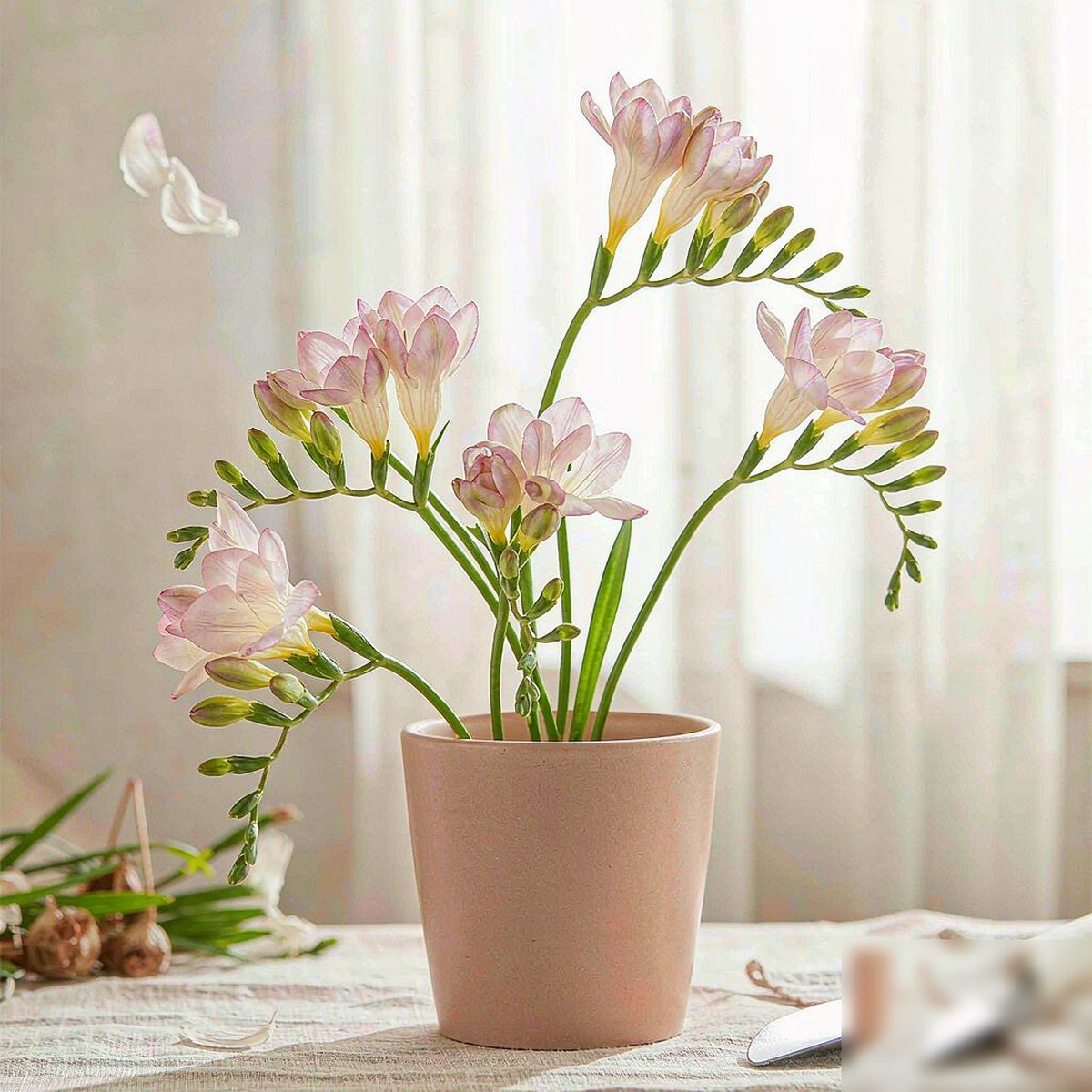
Quick answer: Freesia grows from corms rather than the round bulbs you may be used to, and a pot is the simplest way to grow it where winter freezes the ground. Set firm corms about two inches deep in a free-draining potting mix, give them a cool rooting period, then move the container into bright light. Stems are thin and usually need a slender support, and the flowers are cut when the first floret opens while the buds above it still show color. Scent is the reason to grow freesia: a small bunch can perfume a whole room. Keep corms out of reach of pets and children, since they are risky if eaten.
Why grow freesia in containers
Freesia flowers look delicate, but the plant is a corm with a straightforward cycle. It roots and grows during cool weather, flowers as days lengthen, then dies back and rests through the warm months. In mild winter regions you can grow it straight into a sunny bed. Everywhere else, a container gives you control over the two things that matter most: drainage and temperature.
A pot also solves the support problem. Freesia stems arch under the weight of their own flower heads, and a stem bent to the soil is a stem you cannot cut for a vase. In a pot you can place canes around the rim, move the vessel away from a hot radiator, and follow the light through the season. If you want a wider plan for a harvest bed rather than a windowsill, read our cut flower garden guide first. This article focuses on the one crop that gives the strongest fragrance for the least floor space.
Start with corms that feel firm
Corm size is modest compared with a tulip bulb, so quality is easy to judge by hand. A healthy corm feels heavy for its size and has dry, intact papery skins. Pass over anything soft at the neck, shriveled, or marked with mold. One soft corm in a pot can spread moisture problems to its neighbors.
- Fragrant white freesia bulbs are the classic choice for a clean, heavily scented vase and a bright windowsill.
- Mixed freesia bulbs for a scented vase give a sequence of different flower forms from one pot, which is useful if you like arranging rather than planting a single color.
- Pink freesia bulbs for windowsill pots suit a small container and a softer, warmer look indoors.
- Magenta freesia bulbs for statement bouquets make a bolder display when you want flowers that read across a room.
- Red and yellow freesia bulbs for containers and borders bridge the gap between a patio pot and a sunny outdoor bed in a mild climate.
Plant several corms together rather than one to a pot. Five to eight in an eight inch container make a display that looks intentional, and the foliage helps the thinner stems stand upright by leaning on each other.
Pot, water, and give them a cool start
The method is quick, and each step has one purpose. Work on a table where you can see the growing tip of every corm.
- Choose a pot with real drainage. A six to eight inch deep container with several holes at the bottom is ideal. Terracotta dries evenly and is forgiving if you water too much.
- Mix for drainage, not richness. Combine a good potting mix with perlite or coarse grit so water passes through quickly. Heavy garden soil in a pot is the fastest way to lose corms.
- Set the corms pointed end up. Cover them with roughly two inches of mix, leaving an inch or two of space below the rim for watering.
- Water once, then hold back. Water thoroughly and let the excess run out. After that, keep the mix lightly moist rather than wet; wait until the top feels dry before watering again.
- Root cool, flower bright. Keep the pot in a bright but cool spot while roots and short shoots develop. Once growth is clearly underway, move it into your sunniest window and turn the pot every few days so stems grow straight.
Add support early, while the shoots are only a couple of inches tall. Push thin canes or twiggy stems into the mix near the rim and loop soft twine around them loosely. Waiting until the buds are heavy means disturbing roots at exactly the wrong moment. Our hyacinth forcing project uses a different technique, but it shares the same cool start followed by a bright finish.
Plan a sequence instead of one big flush
Scented flowers are best enjoyed over weeks. Because freesia does not need a long cold treatment, you can start small batches at intervals and move each pot into position as the previous one fades. The dates below are a planning guide, not a promise: temperature and light change the pace.
| When you pot | What the pot is doing | How to use it |
|---|---|---|
| Early November | Rooting in a cool room | First batch, close to a bright window |
| Late November | Short shoots emerging | Start stakes and begin turning the pot |
| Early December | Stems lengthening | Move into the brightest light available |
| Mid December | First buds showing color | Begin cutting as florets open |
Label each pot with its start date. When you set a second batch two or three weeks after the first, you will know which display should open next and can keep the ones you want closest to where you sit. This is the same scheduling logic that makes a bulb display last through winter, whether the bulbs are hardy outdoors or grown in containers on a sheltered porch.
Cut at the right stage and keep the foliage
Cut a freesia stem when the lowest floret has opened and two or three buds above it are showing color. Those buds will continue to open in water, so a stem cut early lasts far longer than one harvested in full flower. Use a clean, sharp knife, trim the base again before placing the stem in a clean vase, and change the water every couple of days. Keep the arrangement out of direct sun and away from fruit bowls, which shorten the life of many cut flowers.
After the flowers fade, cut the flower stems near the base but leave every green leaf. The leaves feed the new corm forming underground, and this is the stage people most often get wrong. Water moderately while foliage is green, then reduce watering as it yellows and let the pot go dry during rest. In a cold region, bring the pot into a frost free place for winter rather than leaving it outside. In a mild region, a sheltered corner with sharp drainage can work. Either way, keep the corms dry while they are dormant and out of reach of pets and children.
Choose five firm corms, a pot with drainage holes, and a cool bright spot you can commit to for a few weeks. Start one batch now and another in two weeks. By the time the shortest days arrive, you will have something better than a bouquet from a shop: stems you cut yourself, still carrying that unmistakable freesia scent. Browse the linked corms above and plant your first pot today.