
Blog
Deer and Squirrel Resistant Bulbs for a Spring Garden That Lasts

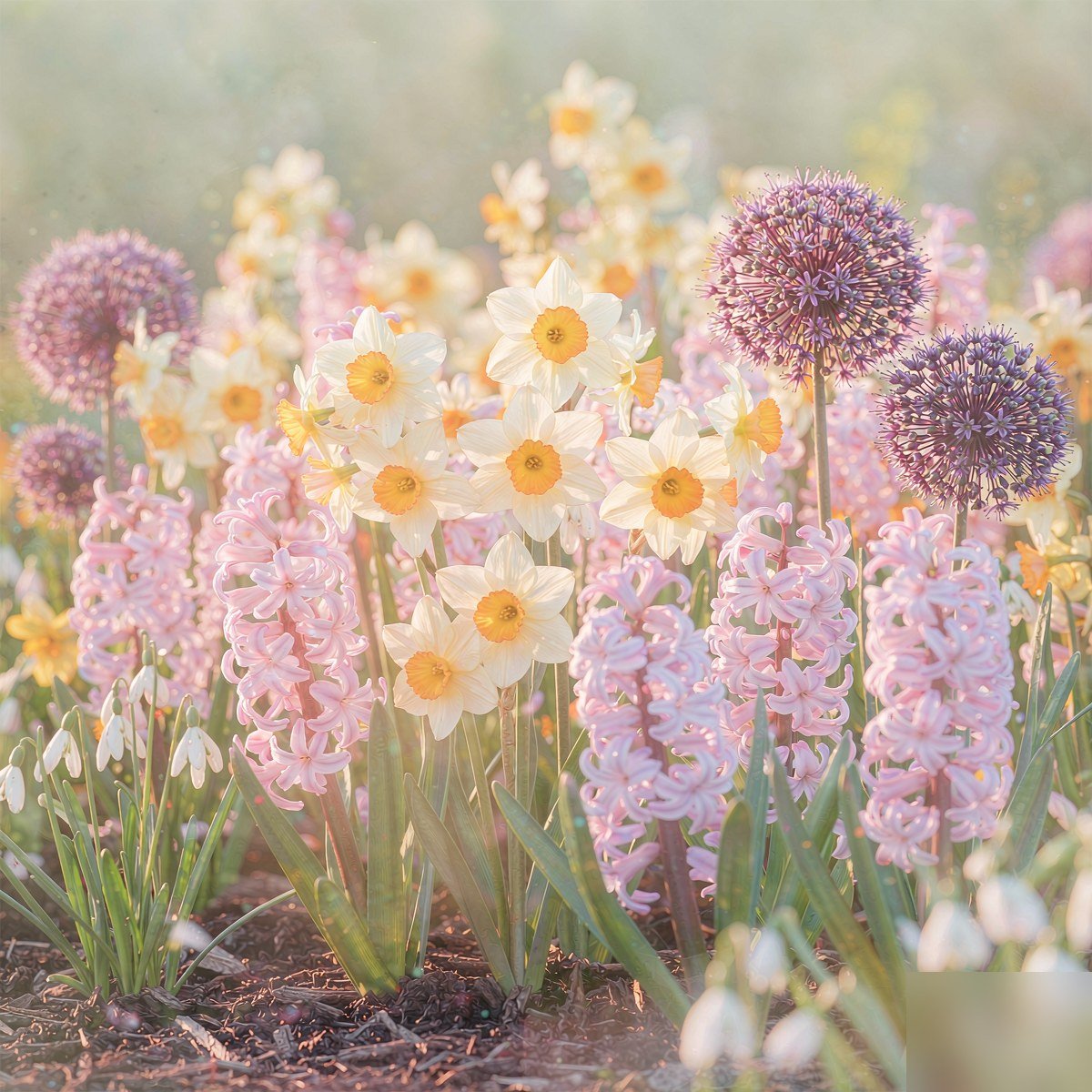
Quick answer: If deer, rabbits or squirrels keep digging up your spring planting, the cheapest fix is to grow bulbs they would rather not eat. Daffodils, ornamental alliums, hyacinths, snowdrops and bearded irises form a dependable, wildlife-resistant palette. Plant them in drifts in soil that drains freely, reserve the more tempting tulips and crocuses for pots or protected beds, and leave the foliage standing after flowering so each clump can rebuild. No bulb is completely animal-proof, but a smart plant list turns a spring full of empty holes into a display that returns for years.
Why Some Bulbs Disappear and Others Stay
Wildlife is not random about what it eats. Deer and rabbits browse on taste and texture, while squirrels and voles dig for the starchy storage organ underground. A bulb that smells strongly, carries bitter compounds or simply offers little reward tends to survive the winter intact. That is why a border of mixed bulbs often looks patchy in April: the varieties animals dislike are still flowering, while the favourites have been lifted, chewed or dragged off to a neighbours garden.
You do not need to fence the whole yard to change this. Build the backbone of your spring bed from resistant types, then treat the vulnerable ones as accents you can protect individually. The result still looks varied, and your planting budget goes much further because you are not replacing the same bulbs every autumn.
The Shortlist: Bulbs Wildlife Usually Skips
These are the groups that earn their place in a low-conflict garden. Each one is available as a real planting bulb, so you can put the whole plan into a single order.
| Bulb | Why it is usually left alone | Best place to plant |
|---|---|---|
| Daffodils | Bitter compounds in bulb and foliage; seldom taken more than a nibble | Drifts in borders, under deciduous trees, naturalised in grass |
| Ornamental allium | Onion-family scent in every part of the plant | Sunny, sharply drained beds and the front of a mixed border |
| Hyacinth | Strongly scented flowers and dense, resinous foliage | Near a path or doorway where you can enjoy the fragrance |
| Snowdrop | Small, early and low-reward; foliage carries bitter compounds | Cool, humus-rich shade and woodland edges |
| Bearded iris | Tough rhizomes with a sharp, unpalatable bite | Warm, well-drained spots that bake in summer |
| Lycoris | Blooms with no foliage at all, so there is little to browse | Late-summer borders and cut-flower patches |
Start with a reliable trumpet type such as trumpet daffodil bulbs. It is the sort of daffodil you can scatter widely and then largely forget, and it anchors an early-season display even where deer are regular visitors. For a second wave, add a ruffled daffodil form; the larger cups give a border a stronger focal point without making the planting any more appealing to animals.
Alliums: The Onion-Scented Backbone
Ornamental alliums deserve a bigger role than they usually get. They flower just as the last tulips fade, their round heads read well from a distance, and the onion scent that makes them so useful in the garden is exactly what keeps most four-legged visitors moving on. A tall variety such as tall ornamental onion bulbs gives a border vertical structure in late spring, while a mixed collection like a mixed ornamental onion collection stretches the show across several weeks because the varieties bloom at slightly different times.
Plant alliums in full sun and sharp drainage. If your soil holds water after rain, work in coarse grit or compost and consider a raised bed; a wet winter is a bigger threat to alliums than any animal. Small types can be tucked three to four inches deep along an edge, while large globe-headed kinds go six to eight inches down. Once established, they ask for very little and slowly increase into a clump.
Scent, Shade and an Off-Season Trick
Fragrance that delights us can be off-putting to browsing animals. Hyacinths are a good example: plant fragrant hyacinth bulbs where you will pass close enough to catch the scent in mid-spring, or set a scarlet variety nearer a seating area for a bolder colour note. Both perform best in a pot or a raised bed on heavy soil, since hybrid hyacinths dislike winter wet.
For the shadiest corner, snowdrops are one of the few bulbs that genuinely improves in leaf mould and dappled light. This snowdrop bulb naturalises slowly but steadily, flowering in late winter when little else is open. If you want colour later in the year rather than earlier, this lycoris bulb is a clever choice: it produces striking spidery blooms in late summer with no leaves present at flowering time, which gives browsing animals very little to work with. Our Lycoris guide covers its unusual growth cycle in detail.
How to Plant a Resistant Bed
- Choose a well-drained site. Dig a test hole after heavy rain. If water is still standing an hour later, amend the soil or plant in containers instead.
- Set the depth by bulb size. As a rule, plant at roughly three times the bulbs own height, pointed end up. Large daffodils and alliums go six to eight inches deep; snowdrops and small species go three to four.
- Plant in groups, not singles. Clusters of seven to twelve read as a natural drift and are easier for you to protect while they establish.
- Water once, then leave it alone. A single good soaking after planting settles the soil and starts root growth. Winter rainfall usually does the rest.
- Keep the foliage after flowering. Yellowing leaves are feeding next years bloom. Remove them only when they pull away easily.
If you want the layered effect in a single pot, our lasagna planting guide shows how to stack early and late varieties at different depths. Containers are also the simplest way to grow the bulbs that wildlife does like: a tulip on the patio steps is far safer than one in an open bed.
A Note on Pets and Children
Many of the bulbs that deter wildlife do so because they contain bitter or irritating compounds. That same chemistry means they can be a risk to pets and children, so avoid letting them be eaten, and keep unplanted bulbs well out of reach. Plant in soil that cannot easily be scratched up, sweep away fallen bulbs at the end of the season, and wash your hands after handling them. Naturalising daffodils in grass is a good low-fuss way to enjoy them while keeping the planting where you want it.
Start Your Resistant Spring Bed Now
November is an ideal time to put this plan in place: the soil is cool enough to prevent rot but still workable, and the bulbs have weeks to root before the ground freezes. Pick one resistant variety you do not yet grow, add a second for a later bloom time, and plant them together where you can see them from the kitchen window. Browse our spring-flowering bulbs and build a border that comes back on its own, season after season.