
Blog
Rain Lilies for Dry Borders: Planting Zephyranthes for Summer Color

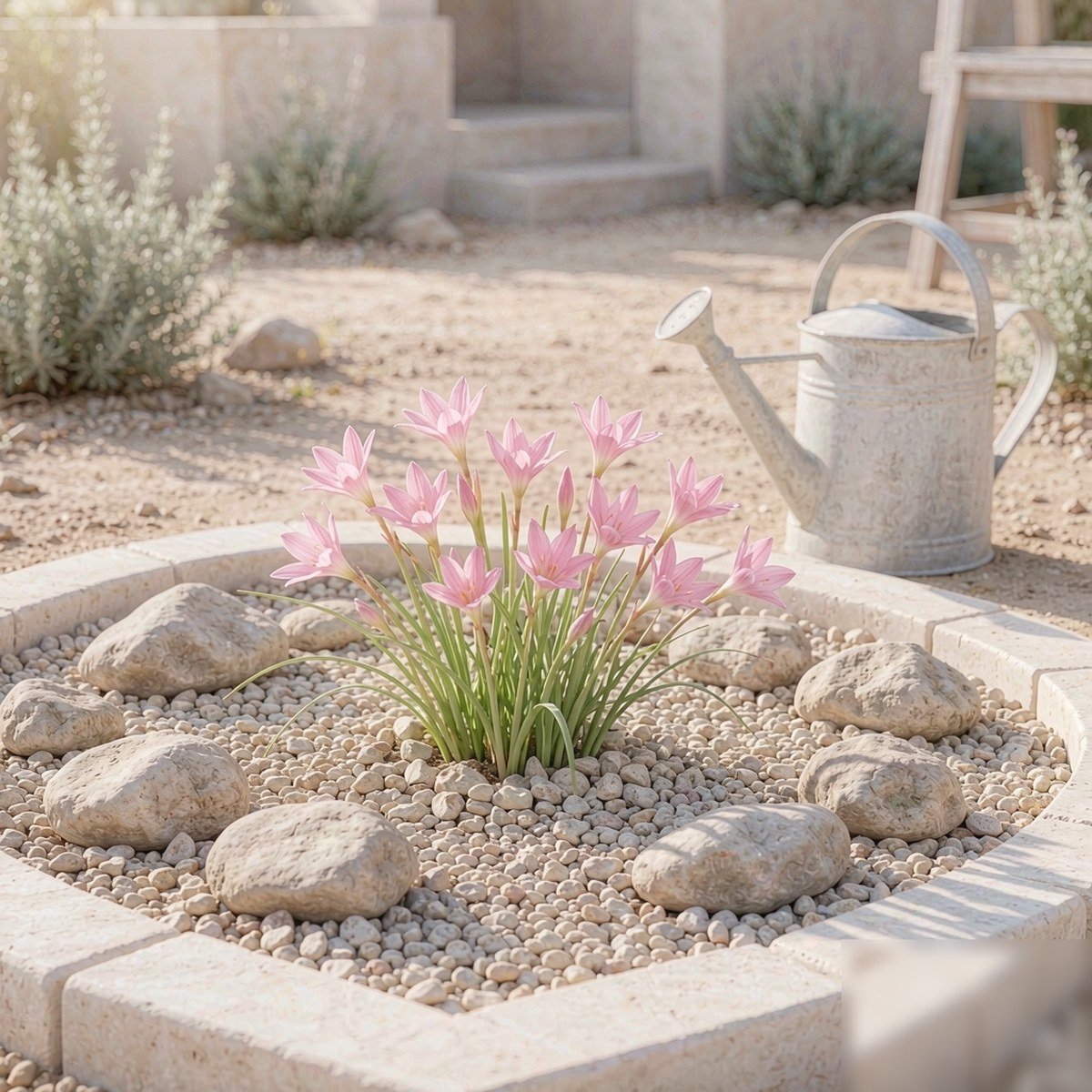
Quick answer: Rain lilies are small bulbs that send up cup shaped flowers a few days after a good soaking, then rest until the next rain. Plant them in full sun or light shade in soil that drains quickly, set the bulbs with the neck near the surface, and water once to settle them. Established clumps tolerate dry spells and often bloom again after a deep watering. In cold winter regions, grow them in pots or lift them before the ground freezes. Like other bulbous plants, they are risky for pets and children if eaten, so keep spare bulbs out of reach.
Why a dry border needs rain lilies
Most bulb advice is about spring flowers. A summer border is a different problem: by July the soil is dry, the early foliage has gone, and the plants that remain are either coping or merely surviving. Rain lilies belong in that second conversation. They are small, they come back after a dry period, and their flowers appear with almost no warning after rain or a deep watering.
Their size is part of the appeal. A clump sits low, with narrow grassy leaves and one flower to a stem, so it fits between stones, along a path edge, or at the front of a border without hiding its neighbors. Plant them in a drift and the effect changes completely: a scatter of pink cups rising out of gravel reads as a small event, not a gap filler. If you already grow sculptural dry garden plants, our caudex plant guide explores a similar low water approach with a very different shape.
Choose the right place before you buy
Rain lilies are tolerant, which is not the same as indifferent. Matching the site to the plant is what turns a few flowers into a clump that multiplies. Consider these options before you commit:
- Rain lily bulbs for rock gardens and gravel beds suit the sharpest drainage and a sunny, stony position.
- Rain lily bulbs for naturalising in drifts are for a loose planting that spreads slowly across a warm border.
- Rain lily bulbs for mass planting and pollinator borders work where you want a low ribbon of summer color rather than isolated flowers.
- Rain lily bulbs for containers and small spaces keep the plant close to hand on a balcony or patio where the soil is entirely under your control.
- Rain lily bulbs for cutting gardens and repeat blooms give you a few short stems for a small vase without stripping the border.
- Rain lily bulbs that multiply over time are the choice when the goal is a denser clump in year two and beyond.
In the ground, pick a site that gets full sun for much of the day and never holds a puddle. Sandy or gritty soil is ideal, and a raised bed is a good answer where clay stays wet. Light shade is acceptable, especially in the hottest part of the country, but a shaded clump tends to flower less. Our summer bulb planting guide covers the wider calendar when you are filling several dry beds at once.
Set the small bulbs shallowly
Rain lily bulbs are not large, and planting them too deep is the most common reason a clump sits green and refuses to flower. Work through these steps when the soil has warmed in spring, or in autumn where winters stay mild.
- Loosen the planting pocket. Work the soil several inches deep and mix in grit if it feels heavy between your fingers.
- Space for a clump. Set bulbs roughly six inches apart in an irregular group. Tighter spacing gives a quicker visual effect; wider spacing gives offsets room to develop.
- Keep the neck near the surface. Cover each bulb with about an inch or two of soil, leaving the top just below the surface. A deep hole asks the shoot to spend too much energy reaching light.
- Water once to settle. Water thoroughly after planting, then stop. Repeated small sips before growth begins do more harm than a single good soak.
- Mark the spot. Put a small label at the edge of the clump. The foliage dies back between flushes, and an unmarked patch is easy to dig up by mistake.
In a pot, use a gritty free draining mix and a container deep enough for roots to spread. Set the pot where it receives strong light and can dry between waterings. A saucer of standing water is not a shortcut to more flowers; it is a way to rot bulbs.
Use dry spells and deep watering
The bloom trigger is the reason gardeners keep rain lilies. A period of dry soil followed by a thorough soaking encourages a new flush. What you do between those events matters more than any fertilizer.
| Situation | What to do | What you are aiming for |
|---|---|---|
| Newly planted bulbs | Water once, then leave them alone until shoots appear | Roots without waterlogged soil |
| Established clump in a dry week | Let the soil dry, then soak the whole root zone | A reset that can trigger flowering |
| Container in hot weather | Check daily, water only when the mix has dried | Warmth and air around the bulbs |
| Foliage yellowing after bloom | Reduce watering and leave the leaves in place | Energy returning to the bulbs |
Flowers last only a few days, so a flush is something to watch rather than something to photograph once and forget. Cut a few stems for a small vase when the buds are just opening, and leave the rest where they are. Never strip green leaves to tidy the clump; they are feeding the next round of growth.
Multiply, overwinter, and make a plan
Rain lilies form offsets around the parent bulb. Leave a clump undisturbed for a season or two and it will usually look fuller. When growth begins again, you can lift a crowded clump, separate the small bulbs with a little soil attached, and replant them in a fresh pocket. This is the simplest way to fill a longer drift without buying more stock each year.
Where winters are cold, pots can be moved into a bright frost free room and kept almost dry until spring. If the bulbs are in the ground and your soil freezes deeply, lift them after the foliage dies back and store them dry and cool, following the approach in our tender bulb lifting guide. In milder regions, a mulched bed with sharp drainage is usually enough. Keep stored bulbs away from pets and children and discard anything soft.
November is the right month to decide where next summer’s dry color will go. Choose a sunny edge, improve the drainage, and order a small group of bulbs while the planting plan is still fresh. Put them in the ground when the soil warms, water once, and then let the weather do the rest. Browse the linked rain lily bulbs above and start your dry border plan today.